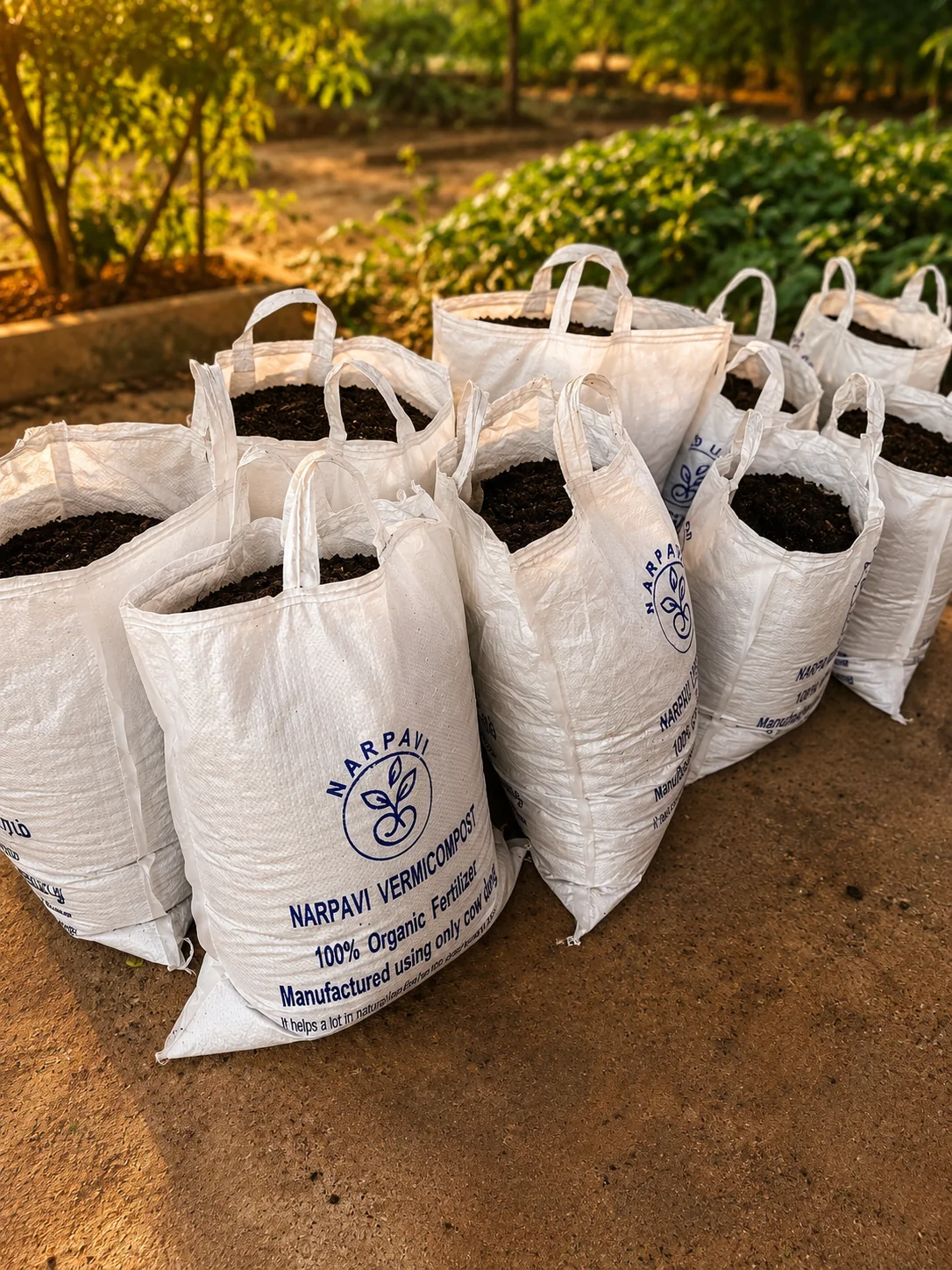
Pure Organic Vermicompost
Cultivated using traditional wisdom and rigorous organic practices. Our premium vermicompost is a biologically active, nutrient-dense soil amendment designed to rejuvenate earth and maximize yield naturally.
Available Sizes
- eco NPK Rich Profile Naturally balanced Nitrogen, Phosphorus, and Potassium.
- water_drop Increased Water Retention Improves soil structure to hold moisture longer.
- check_circle 100% Chemical-Free No additives, pesticides, or synthetic treatments.
How We Make Our Vermicompost
Our vermicompost is produced using a completely natural and carefully controlled process to ensure high quality and nutrient-rich fertilizer.
Raw Material Preparation
We begin with fresh cow dung collected from country cows. The cow dung is first spread out and allowed to dry for about 10–15 days. This step is essential to release excess heat and gases such as methane, which can be harmful to earthworms.
Pre-Decomposition Stage
After partial drying, the cow dung undergoes a natural pre-decomposition process. This helps in stabilizing the material and creating a safe and suitable environment for earthworms.
Filling the Compost Beds
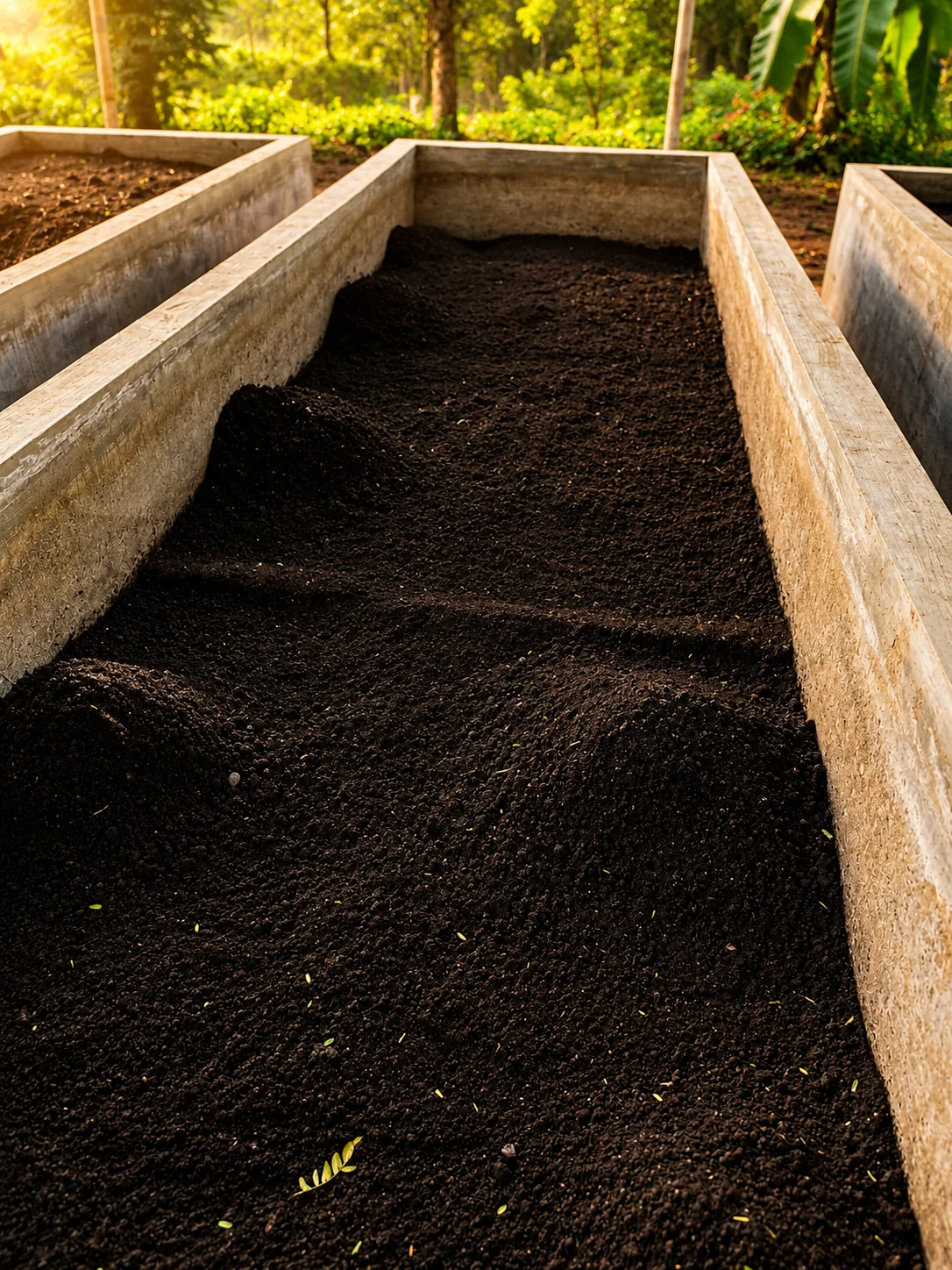
The prepared cow dung is then placed into specially designed compost tanks/beds. These structures provide a controlled environment for effective composting.
Introduction of Earthworms
Healthy composting earthworms (commonly species like Eisenia fetida, Eudrilus eugeniae, etc) are introduced into the beds. These worms play a key role in breaking down organic matter into nutrient-rich compost.
Moisture & Environment Management
Over the next 45–60 days, the compost beds are regularly watered to maintain optimal moisture levels (typically around 60–70%). Proper aeration and temperature are also maintained to support worm activity and survival.
Natural Decomposition & Conversion
The earthworms consume the organic material and convert it into vermicompost, which is rich in essential nutrients, beneficial microbes, and organic matter.
Harvesting and Sieving
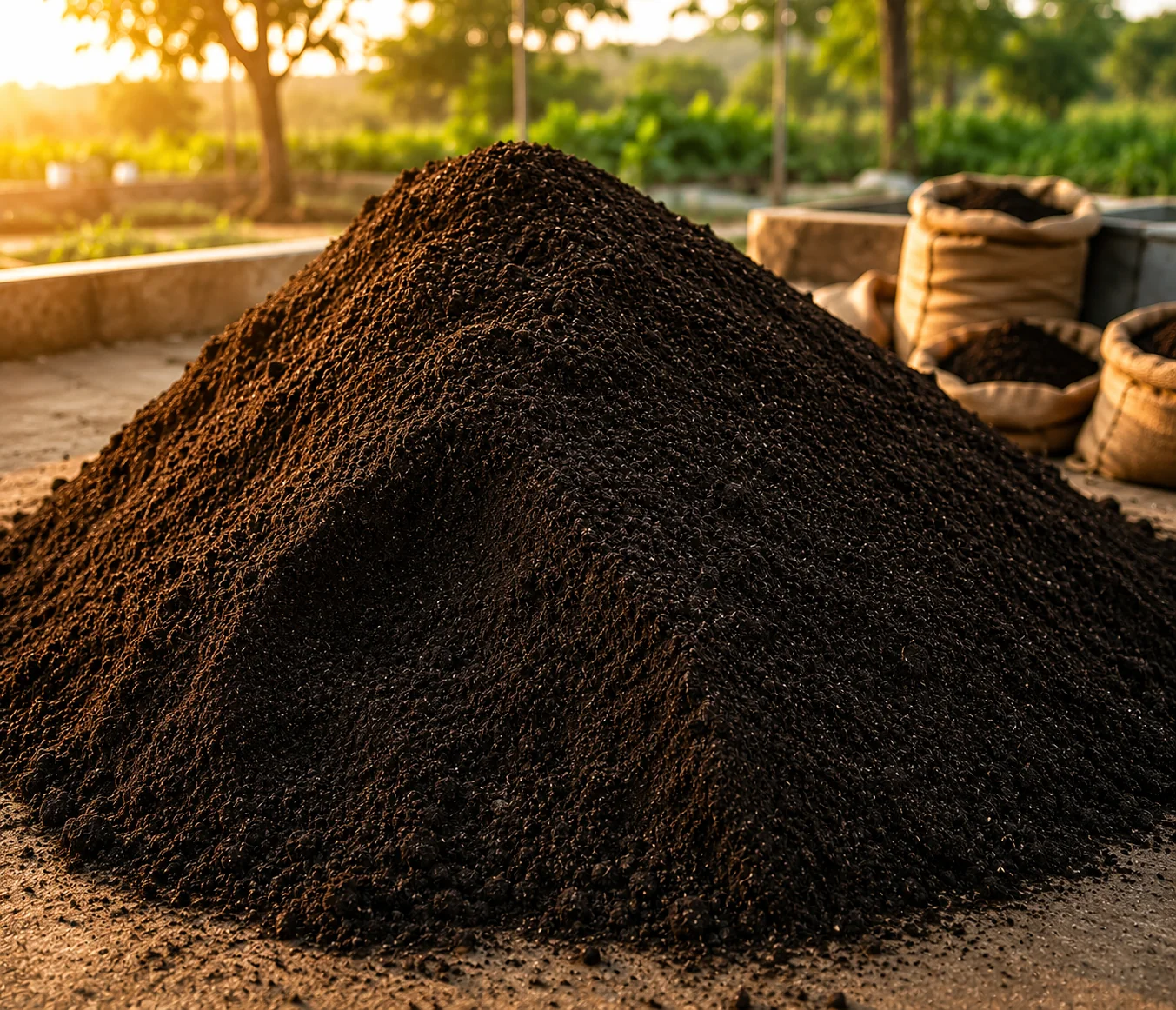
Once the compost is fully processed, it is carefully harvested and sieved to remove any unprocessed material. The final product is fine, dark, and nutrient-rich organic fertilizer.
Product Benefits
Discover the full range of benefits that make RR Narpavi Organics Vermicompost the premium choice for farmers and gardeners.
Improves Soil Structure
Enhances soil texture and porosity, creating the ideal environment for root development and long-term soil health.
Rich in NPK Nutrients
Contains essential nutrients — Nitrogen, Phosphorus, and Potassium — for robust plant growth and abundant yields.
Preserves Soil Fertility
Sustains soil fertility over time, aiding in consistent and healthy crop growth season after season.
Summer Crop Protection
Protects banana, coconut, sugarcane, and fruit crops during dry summer months by maintaining soil moisture and vitality.
Water Retention
Increases the soil's water retention capacity, reducing irrigation frequency and protecting crops from drought stress.
Healthy Natural Food
Supports the production of healthy, natural food by enriching the soil with organic matter, free from chemicals or synthetic additives.
Usage Instructions
Follow these simple guidelines to get the best results from RR Narpavi Organics Vermicompost.
3–5 Cups
Add 3–5 cups of vermicompost to 40 liters of soil for planting seeds. Ensures a nutrient-rich seedbed for strong germination.
2 Tablespoons
Sprinkle 2 tablespoons on top of the soil for indoor plants. Gently work into the surface for best absorption.
2 Kg / m²
Apply 2 kg of vermicompost per square meter for vegetable gardens. Mix into the topsoil before sowing or transplanting.
5–15 Kg / Tree
Use 5–15 kg of vermicompost per tree depending on age and size. Apply around the root zone for maximum nutrient uptake.
20–30%
Add 20–30% vermicompost to amend heavy clay soils. Improves drainage, aeration, and workability for better root penetration.
Storage Instructions
Store vermicompost in a cool and dark place — such as a shed or basement — while maintaining 40–50% moisture to keep the microbial life active. Properly stored, vermicompost remains effective for 6–12 months.